AI Brand Algorithm
What Is an AI Brand Algorithm? Your Brand, Turned Into an AI
TL;DR
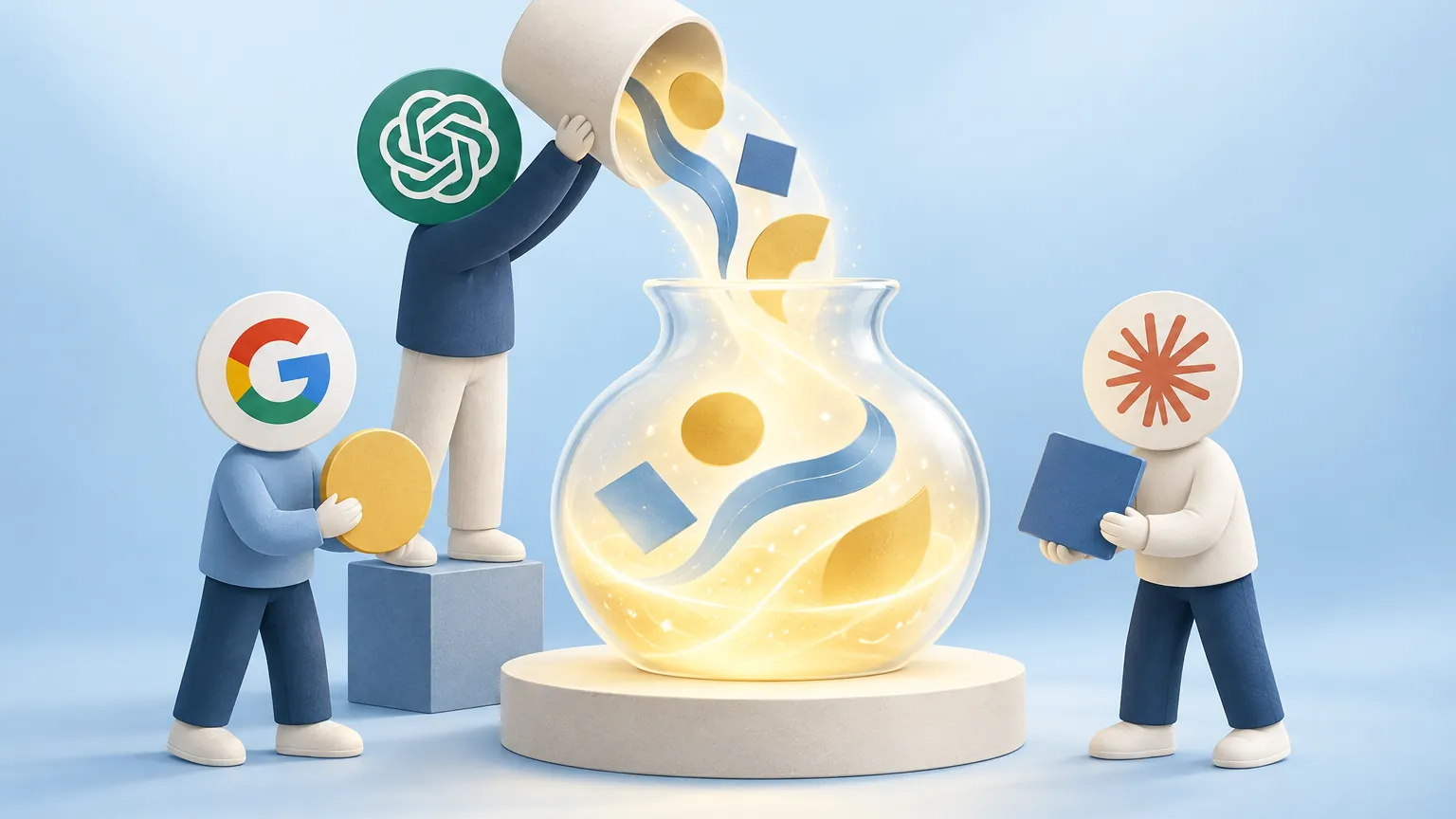
An AI Brand Algorithm is your brand — voice, visual identity, positioning, and messaging — encoded into a working AI, plus the customer and market context it needs to stay consistent. It does what a static brand book never could: it produces on-brand writing and design on demand. You build it once from your own materials, and your whole team works from it.
An AI Brand Algorithm encodes your brand — its voice, visual identity, positioning, and the customer it speaks to — into a working AI that writes and designs the way your brand does.
From a Brand Book on the Shelf to a Working Asset
For most of business history, a brand lived in a brand book: a logo, a color palette, a few pages on tone of voice, a tagline, and the values behind them. Guidelines in a PDF that your team, your designers, and your agencies were meant to follow.
It is worth being precise here, because the word gets stretched. Your brand is not your company. A company is the entity that hires people and signs contracts; a brand is how a business — or one of its products — looks, sounds, and is understood. One company can run several brands, and each one needs its own consistency. The brand book existed to protect it.
It had one job: describe the brand. What it never did was work.
The AI Brand Algorithm is your brand in working form. Instead of describing how you sound and look, it produces in it. Every time you fix a draft's tone, every time someone asks "is this on-brand?", every time a new hire guesses at your voice — that judgment now lives in one place, and it answers. Immediately. Consistently. On brand.
What Goes Into an AI Brand Algorithm
An AI Brand Algorithm is built from two layers: your brand, and the context it needs to apply that brand consistently.
Your brand:
- Voice and tone — how you write and speak, what you never say
- Visual identity — colors, logo rules, typography, what can and cannot change
- Positioning and messaging — what you stand for and the words that win your customer
The context it needs to apply it:
- Customer knowledge — who your customer is and the language they use
- Proof and examples — your best work, templates, and references to write and design from
- Customer-facing procedures — the few processes that shape how the brand actually shows up
This is the brand knowledge your most senior brand lead carries in their head. The difference is that an AI Brand Algorithm makes it available to the whole team, at any time, without the bottleneck.
Understanding why structured, machine-readable Markdown is the technical foundation of this kind of system will help you see how it all fits together before you build.
What It Does for You
Once your AI Brand Algorithm exists, it works. You stop asking yourself "is this on-brand?" and start asking the algorithm. Your team produces consistent output without waiting for approval from the top. A new hire onboards faster because the brand knowledge is accessible — not trapped in the founder's head.
It writes in your voice. It designs to your identity. It knows your customer. It answers the way your most senior brand lead would, because it was built from that knowledge.
This is not a chatbot that handles customer questions on your website. It is not a generic AI assistant you share with millions of other users. It is your brand, working as an AI — built specifically for how your brand shows up, and nobody else's.
Why It Stays Yours
Your AI Brand Algorithm is built from your materials, trained on your knowledge, and delivered to you as your asset. You are not renting access to a generic model and hoping it sounds like you. You own the output. Your data builds your brand intelligence — it does not go into a public model.
This distinction matters more than it might seem. Generic AI tools give everyone the same starting point. An AI Brand Algorithm gives you a competitive advantage that is, by definition, yours alone — because no other business has your exact voice, your procedures, your client knowledge, or your way of operating.
How to Start
The first move is getting your brand knowledge into a form an AI can use. That means taking the first step into AI — understanding what you already have and what needs to be structured before you can build.
You do not need a large company or a technical team to do this. You need a clear picture of what your brand actually is, and a process to translate that into something an AI can hold and use every day. Gugubrand delivers the AI Brand Algorithm to businesses nationwide.
→ Start your AI Brand Algorithm
Not sure it's your move yet? See if you're a fit in 60 seconds.
- AI Brand Algorithm
- GEO
- Branding
- AI for Small Business
Frequently asked questions
What is an AI Brand Algorithm?
An AI Brand Algorithm is your brand — voice, visual identity, positioning, and messaging — encoded into a dedicated AI, with the customer and market context it needs to apply that brand. It produces on-brand writing and design the way your most senior brand lead would, consistently across the whole team.
How is it different from a chatbot or a custom GPT?
A chatbot answers customer questions on a website. A custom GPT is a generic AI given a few instructions. An AI Brand Algorithm is built entirely from your materials — your documents, procedures, voice guidelines, and client knowledge — and it operates as your brand, not as a general assistant.
What goes into building an AI Brand Algorithm?
Two layers: your brand — voice and tone, visual identity, positioning and messaging — and the context it needs to apply that brand, such as who your customer is, your best examples and templates, and the customer-facing procedures that shape how the brand shows up. Most businesses already have this; it just needs structuring so an AI can use it.
Do I own it? Is my data safe?
Yes. Your AI Brand Algorithm is built from your materials and delivered to you as your asset. Your data is used to build your brand intelligence — not to train a public model. You are not renting access to a generic tool and hoping it sounds like you; the output belongs to your business.